Spain · Monochrome locations
Monochrome Locations in Spain — Villas & Interiors That Photograph in Black & White
A curated shortlist of Spanish locations built for monochrome work — Ibicenco whitewash, Mallorcan stone, Tramuntana shadow and modernist concrete — chosen for tonal range, shadow depth and textural richness rather than colour. For fashion stylists, editorial photographers and music-video crews shooting black-and-white campaigns.
Intro · Monochrome positioning
Black-and-white is back — and it needs the right architecture
Monochrome is having its third major revival: Zara’s AW23 and AW24 campaigns shot almost entirely in grayscale, Dior’s recent mono beauty work, Rick Owens’ continued architectural black-and-white register, and the ongoing legacy pull of Peter Lindbergh, Paolo Roversi and Richard Avedon visible across the 2020s editorial calendar. Modern sensors deliver dynamic range the film era couldn’t, and a post-2023 appetite for slower, less-colour-saturated work has pushed black-and-white back onto the shot list for fashion, beauty and music video.
The locations that actually photograph in monochrome are a narrower set than it looks. Colour hides a lot; black-and-white doesn’t. A location reads in mono when it carries tonal range — deep shadow volumes, mid-tone wall planes and clean highlights — plus texture (lime-washed wall, dry stone, untreated timber, brushed concrete) and geometry (arches, directional shadow, repeating thresholds). This shortlist is curated against that specific brief across Ibiza, Mallorca and wider Spain, not a generic villa list filtered pretty.
Request a shortlist →
Planning guide · long-form
Monochrome locations, scouted: why black-and-white is back and what a location needs to carry it
Black-and-white as a current editorial choice, not a retro move
Monochrome is having its loudest return since the Lindbergh/Roversi era. Zara’s AW23 and AW24 ran almost entirely in grayscale; Dior’s recent beauty work has re-adopted black-and-white as a signature; Rick Owens has operated inside a near-permanent monochrome register and set the architectural-severity tone half the industry now references. Peter Lindbergh’s legacy still shapes the documentary-portrait side — unretouched, high-contrast, shadow-first — and Paolo Roversi’s velvet mid-tones continue to define the softer beauty register. Sitting behind all of it: post-2023 sensor dynamic range that captures more highlight and shadow detail than film ever did, and an ad-and-fashion appetite for slower, less saturated, more considered work. Black-and-white in 2025–2026 is not a nostalgia choice. It is a current, working register with an enormous ongoing commercial output, and it needs the right architecture to land.
What makes a location photograph well in monochrome
Three things, none of them colour. First, tonal range — a location must carry clean highlight, deep shadow and a populated mid-tone band; an all-white space with no shadow volume reads flat, and an all-dark one crushes. Second, texture — lime-washed plaster, dry stone, aged timber, brushed concrete, linen and chalk all hold detail under grayscale conversion, where smooth gloss-paint walls collapse into single flat tones. Third, geometry and shadow behaviour — arches, deep-set windows, cantilevers, staircases, repeating thresholds, pergolas and directional shadow across a façade build the compositional structure black-and-white needs because colour can no longer do that work. Polarising filters, a gentle S-curve in post and modern sensor dynamic range then let the location’s existing tonal structure do most of the storytelling without heavy retouch.
Examples across regions — Ibicenco whitewash, Mallorcan stone, modernist concrete
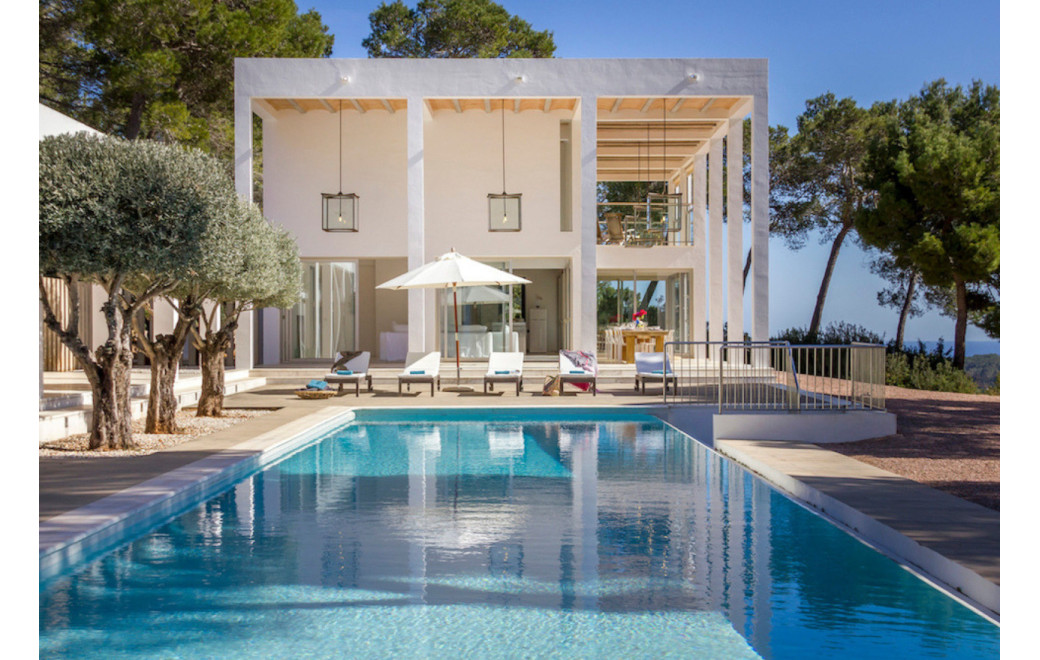
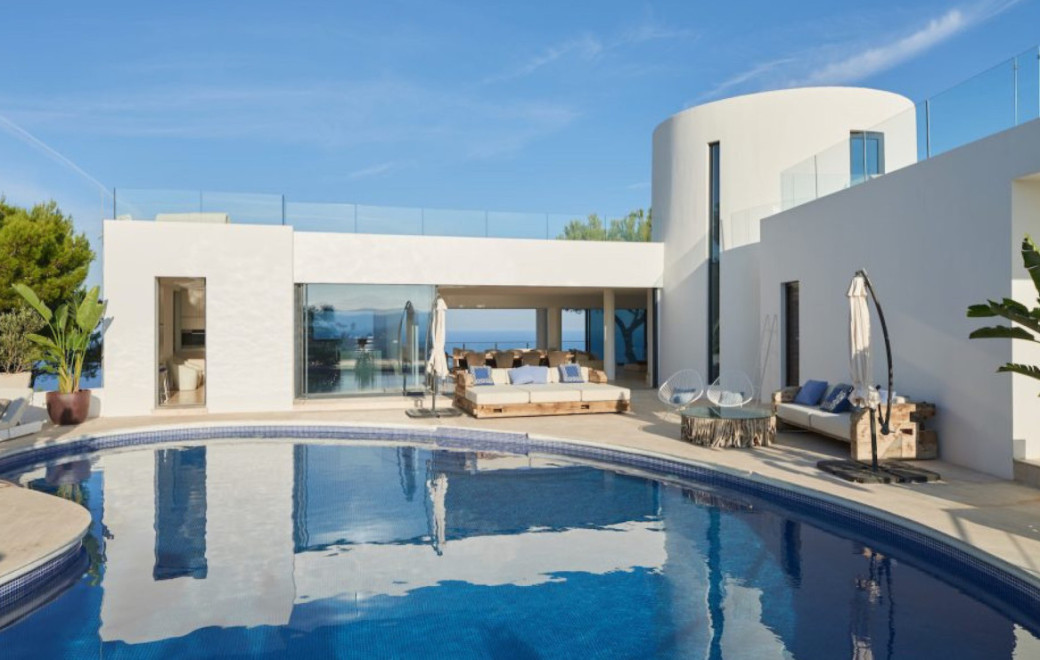
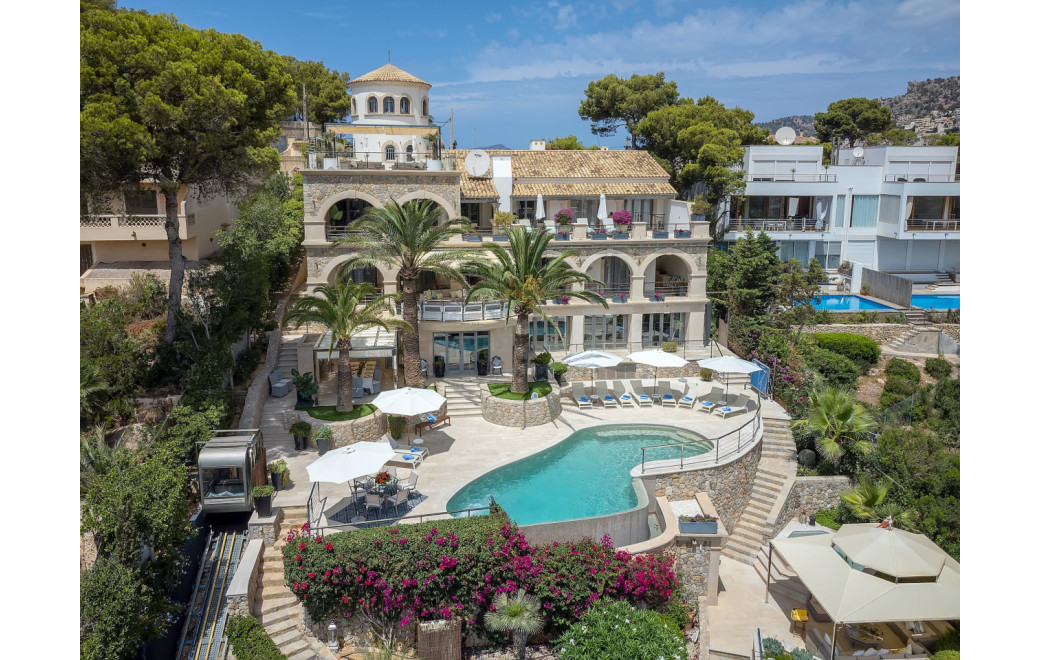
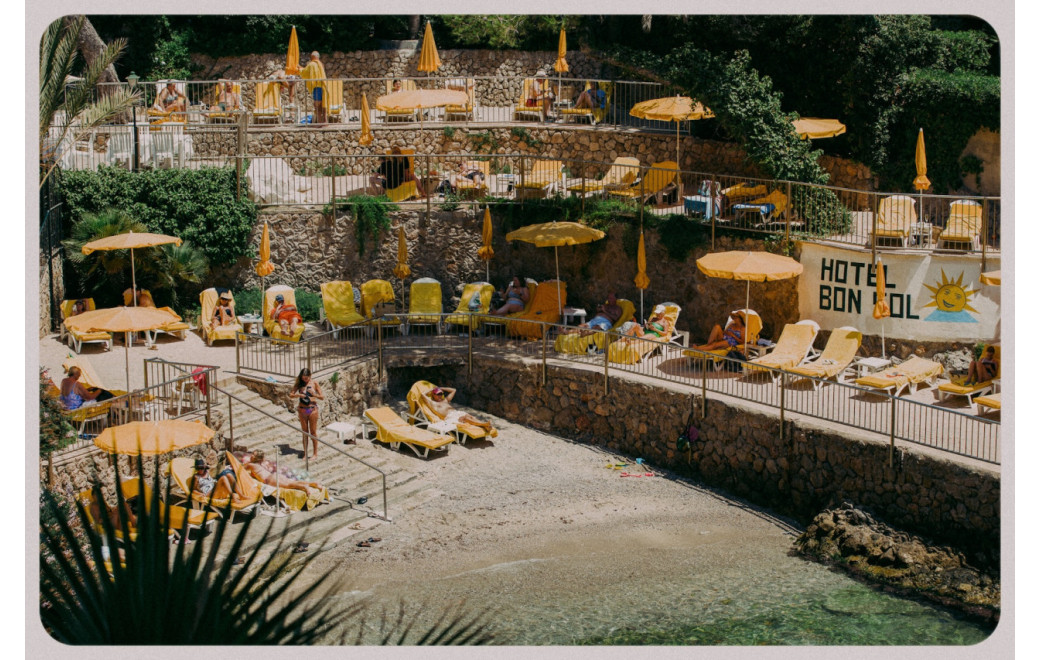
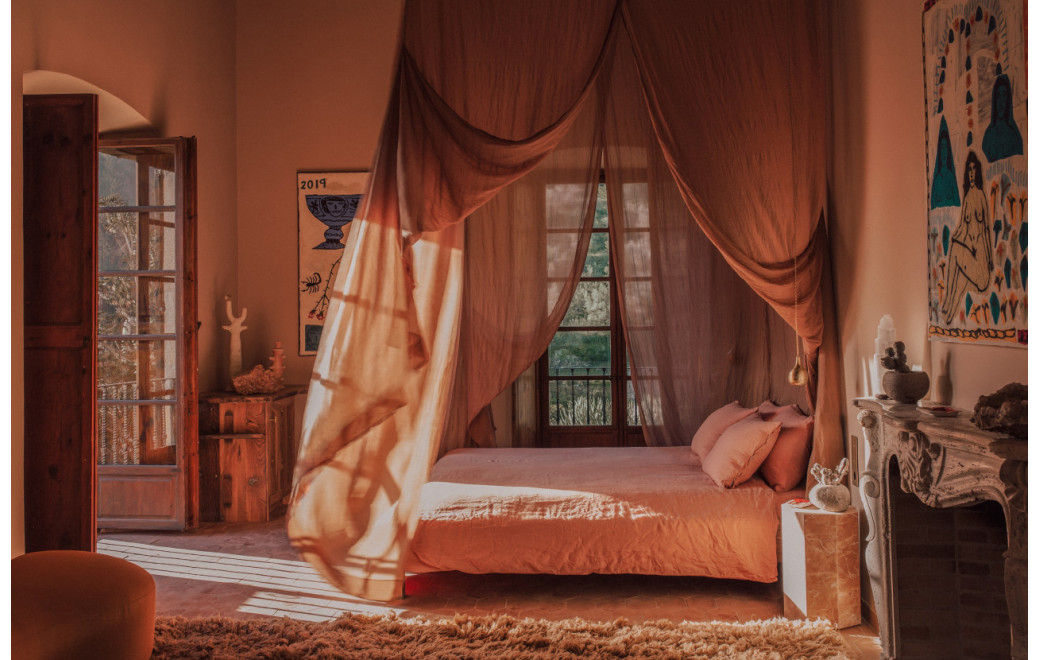
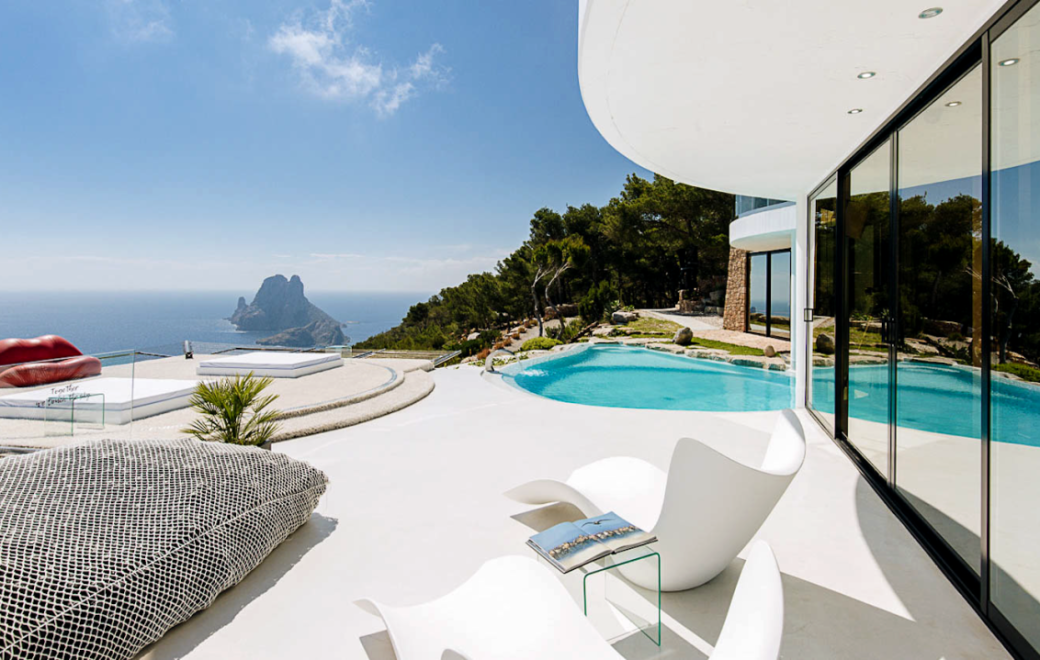
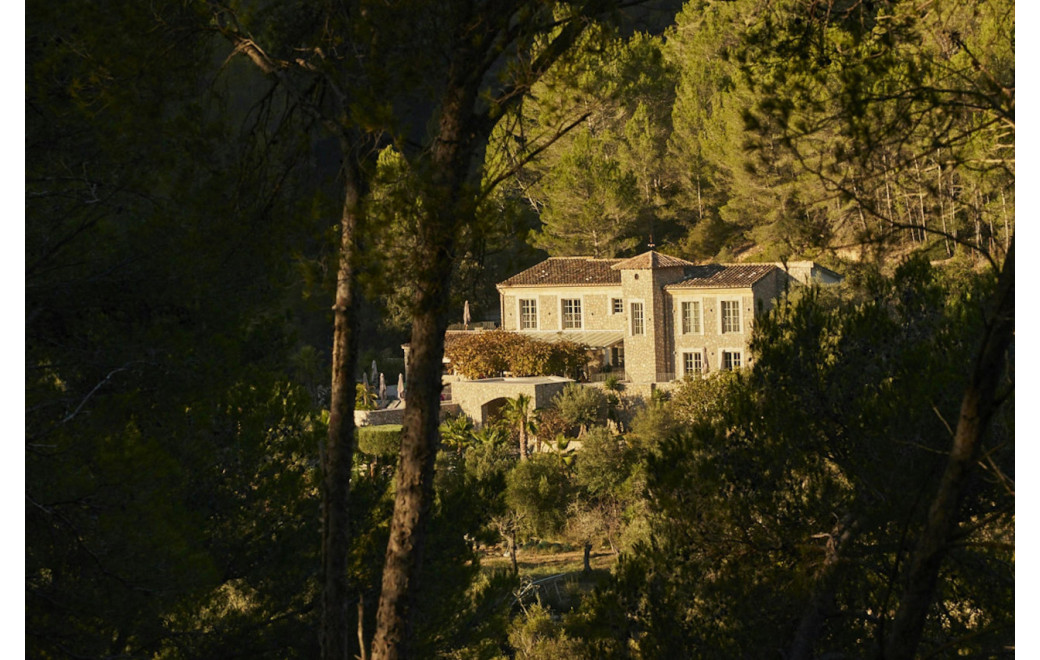
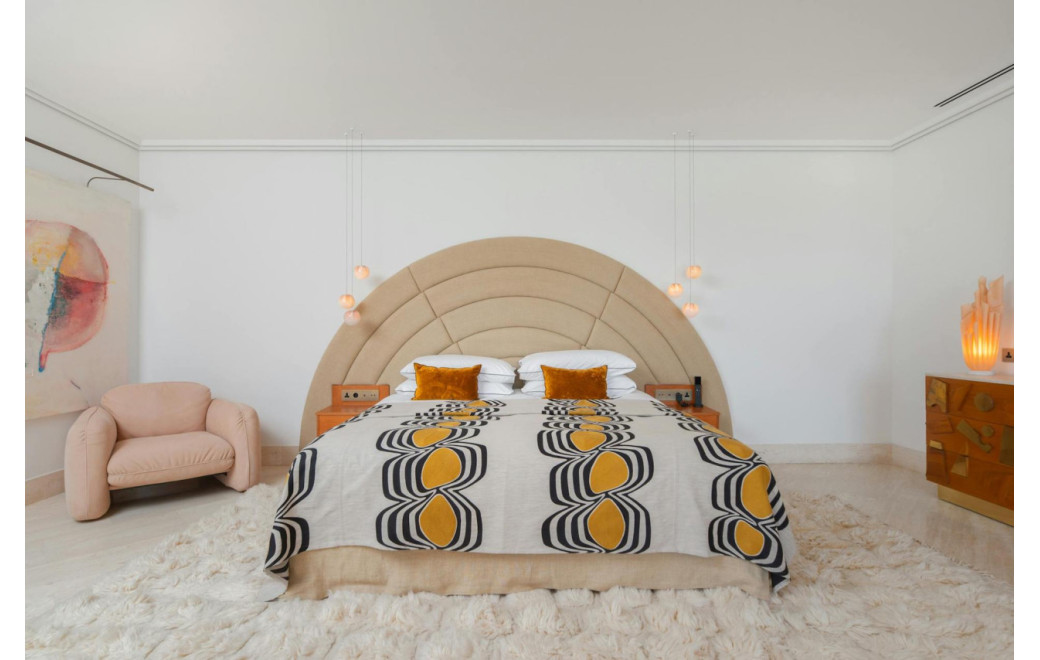
Ibiza brings the cal whitewash tradition — hydrated-lime wash applied in annual cycles to fincas and village houses, producing a soft, textural white that photographs as near-pure highlight with retained surface detail. Sleek Modern Villa, Modern Villa Es Vedra and Villa Na Xamena sit inside this register with modernist additions — cantilevered overhangs, deep-set windows, sabina-wood contrast. Mallorca delivers the other half of the shortlist: Tramuntana dry-laid limestone (Hotel Bonsol, Boutique Hotel Mallorca, Casa Campo) sits in the mid-grey band once converted and gives mid-tone texture for beauty and tactile fashion work. Wider Spain adds modernist concrete and architect-designed residential work — brushed concrete, steel, stone cladding — for the Rick-Owens-adjacent architectural register. Each location on the shortlist is chosen for its tonal behaviour in black-and-white, with honest notes on shadow direction, best hour and which walls read cleanly.
Lighting considerations for black-and-white on location in Spain
Monochrome wants directional light, not flat light. The 10–11am and 4–6pm windows on whitewashed Ibicenco walls give the cleanest architectural shadow geometry — deep eyebrow blacks under window lintels, hard rectangles on the floor, crisp edge definition along sabina-wood shutters. Midday noon is usable under sabina pergolas, covered patios and interior corridors where hard overhead sun becomes indirect light through shade. Tramuntana stone carries well in morning cool-tone light (8–10am) when its texture hasn’t flattened under heat-haze shimmer. Overcast days — rarer in Spain but useful when they come — deliver soft mid-tone portraiture the way Peter Lindbergh shot Pirelli. Polarising filters enhance depth and drama and reduce reflection on wet surfaces and pools. Shoot RAW for maximum latitude, test conversion on location (most modern backs have a mono preview mode worth using as a composition tool), and treat shadow preservation as a higher priority than highlight retention — digital sensors recover highlights from RAW more easily than shadows.
Monochrome shoots these Spanish locations suit
Grayscale fashion editorials (whitewash, stone, concrete registers)
Architectural beauty and fragrance campaigns
High-contrast black-and-white e-commerce (AW-season palettes)
Music-video shoots in monochrome or desaturated register
Rick-Owens-adjacent architectural-severity lookbooks
Lindbergh-reference documentary-portrait editorials
Roversi-reference soft mid-tone beauty stories
Analogue and grain-led black-and-white photography
Send a mood board (Lindbergh, Roversi, Avedon, Rick Owens, recent Zara AW or Dior Beauty mono work), the date window, crew size, wardrobe palette and any non-negotiables — whitewash, dry stone, concrete, deep-shadow interior, specific sun direction. We return a ranked monochrome Spain shortlist of three to five locations across Ibicenco whitewash, Mallorcan stone and modernist concrete — with honest notes on tonal range, best shooting hour, shadow direction, texture character, indoor alternatives for weather and adjacent spots you can fold into the shoot schedule.
Common questions
Frequently asked
What actually makes a location photograph well in black-and-white?
Three properties, none of them colour. Tonal range — a populated spread of highlight, mid-tone and shadow in a single frame, not a flat white box or an undifferentiated dark interior. Texture — lime wash, dry stone, aged timber, brushed concrete, linen, unglazed ceramic; surfaces that hold detail once colour is removed. Geometry — arches, deep-set windows, cantilevers, repeating thresholds, staircases, strong directional shadow on a façade — the compositional structure that has to carry the image once colour is no longer doing half the work. Most location listings ignore these three and filter on colour instead, which is why a pretty villa can be wrong for a mono brief. Our shortlist scores against exactly those three.
What time of day is best for monochrome exterior shooting in Spain?
Directional, not flat. On whitewashed Ibicenco walls the cleanest architectural shadow sits in the 10–11am and 4–6pm windows — hard eyebrow blacks under lintels, crisp rectangles on the floor, clean edge along sabina shutters. Tramuntana stone carries well 8–10am before heat-haze flattens texture. Midday noon works indoors, under pergolas and in shaded patios where overhead sun becomes indirect. Overcast days — rarer in Spain — give soft mid-tone portraiture in the Lindbergh register. We mark preferred shooting hour per location against sun direction on the shoot schedule so the day chases the light rather than fighting it.
How do I test whether a location will work in mono before booking?
Three quick tests before we put a property on the shortlist. One — desaturate a daylight reference image of each wall or interior and check for populated highlight, mid-tone and shadow regions; if everything collapses into a single grey band, the location is flat. Two — zoom into texture at 100%; lime wash, dry stone and aged timber should hold visible detail, gloss-painted or polished surfaces will not. Three — check for at least one high-contrast architectural element (deep-set window, arch, cantilever, dark-timber-on-white, stone-on-white) per primary set. On the recce day we shoot a mono preview on the actual body you intend to use, in the actual shooting hour, so what you see is what the campaign will see.
Digital or film for black-and-white fashion work — what do most crews bring to Spain?
Both, usually splitting by brief. Digital (Phase One, Hasselblad H and X, Leica M Monochrom, Fuji GFX) now delivers dynamic range and shadow detail beyond what film can recover — standard for editorial, beauty, campaign. Film comes onto set when the brief specifically asks for analogue grain and tonal roll-off: Ilford HP5 and Delta 3200 for 35mm, Tri-X 320 for medium format, T-Max 400 for cleaner mid-tone work. Most crews shoot digital as the hero and run a parallel film camera for one or two film frames to intercut — a hybrid approach that’s become standard since 2023. Local film-processing access is limited on Ibiza; Palma and Madrid have full labs. We flag this against the shortlist so you can plan the post-schedule.
Do polarisers, ND and contrast filters actually help on a monochrome shoot?
Yes, selectively. Circular polarisers intensify sky-to-wall contrast, cut glare from pool surfaces and whitewashed walls, and enrich shadow depth — the single most useful filter on a Spanish monochrome exterior. Red and orange contrast filters (or their digital equivalents in post) deepen blue skies to near-black behind a whitewashed villa, which is the classic architectural-mono look. Yellow softens the effect for portraiture. Graduated NDs help where a whitewashed wall meets a hard sky. These are standard kit for monochrome photographers and stylists; we mention them because several of our locations (Villa Na Xamena, Casa en el Mar, Villa Jondal) have specific sea-and-sky framings where a polariser materially changes the image.
Can you combine Ibiza and Mallorca across one monochrome campaign?
Yes — we can run multi-island mono briefs as a single booking. Ibiza delivers the whitewash and modernist-Ibicenco register (Sleek Modern Villa, Villa Na Xamena, Modern Villa Es Vedra); Mallorca delivers Tramuntana stone and tonal-interior work (Hotel Bonsol, Boutique Hotel Mallorca, Casa Campo). The two islands are a 30–45 minute flight apart or a short ferry, so a three-day campaign can run Ibiza day one, travel morning day two, Mallorca afternoon day two, Mallorca day three without stressing the schedule. One point of contact covers both — transfers, permits, local fixers, catering, accommodation, weather alternative — so the production is as lean as a single-island shoot.
How do I request a monochrome Spain location shortlist?
Send a mood board (Lindbergh, Roversi, Avedon, Rick Owens, recent Zara AW, Dior Beauty mono, or any specific reference that codifies the look), the date window, crew size, wardrobe palette and non-negotiables — whitewash versus stone versus concrete, specific sun direction, cliffside versus interior, digital versus film. We return three to five ranked monochrome Spain locations across Ibicenco whitewash, Mallorcan stone and modernist concrete, with honest notes on tonal range, best shooting hour, shadow direction, texture character and indoor weather alternatives.