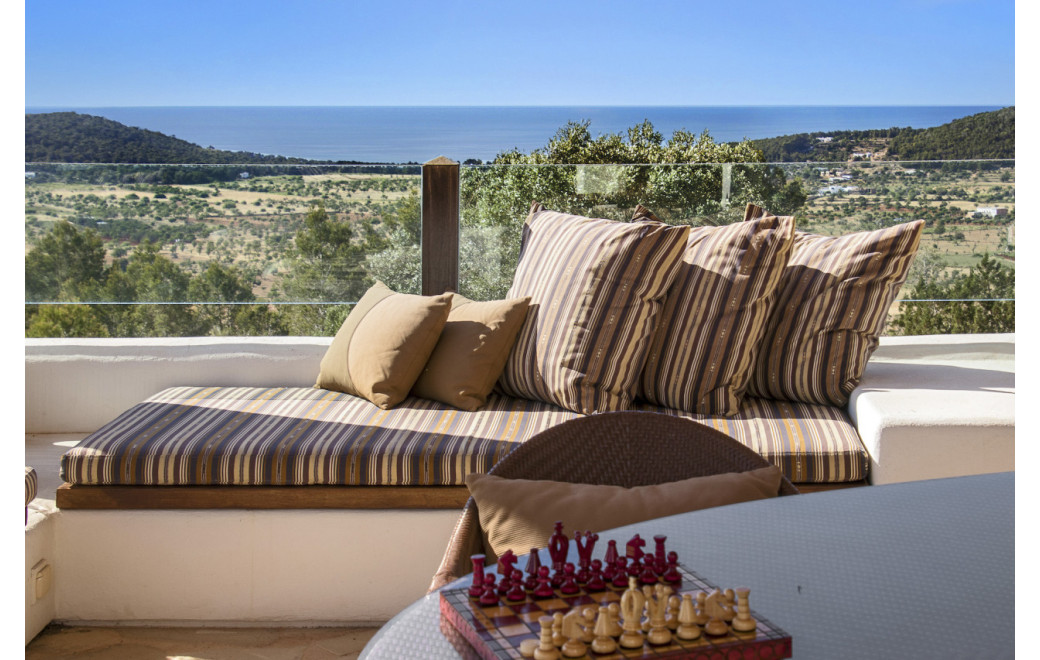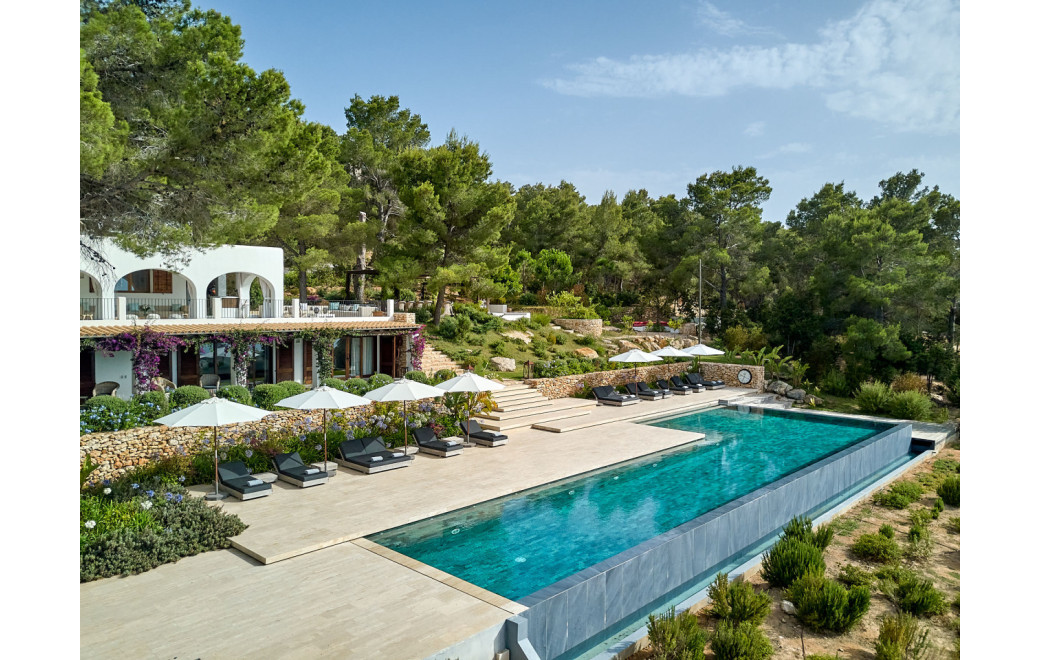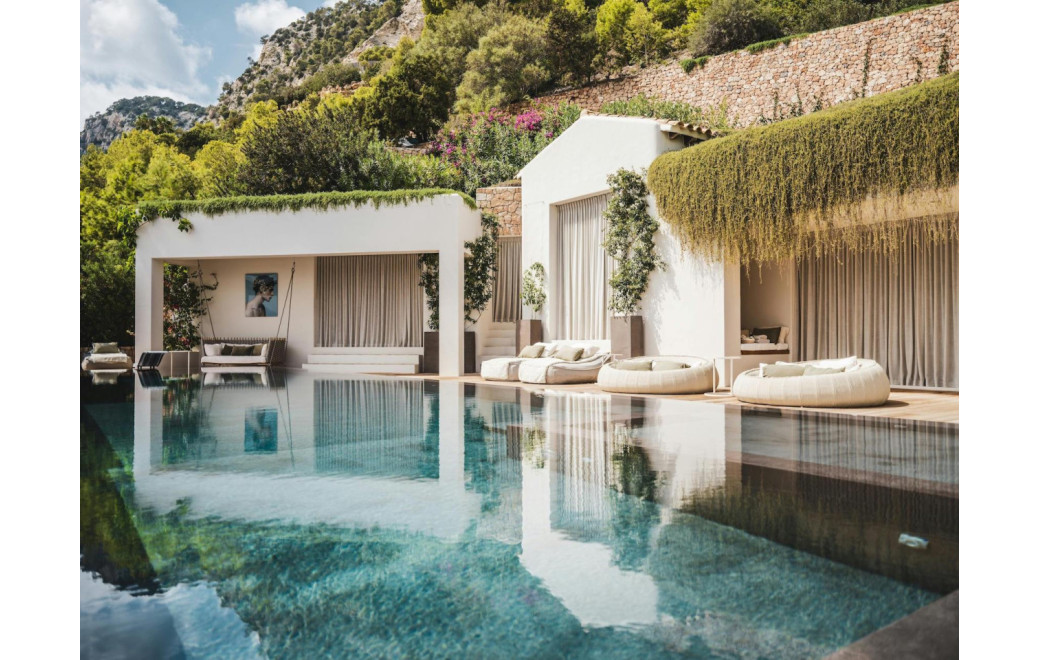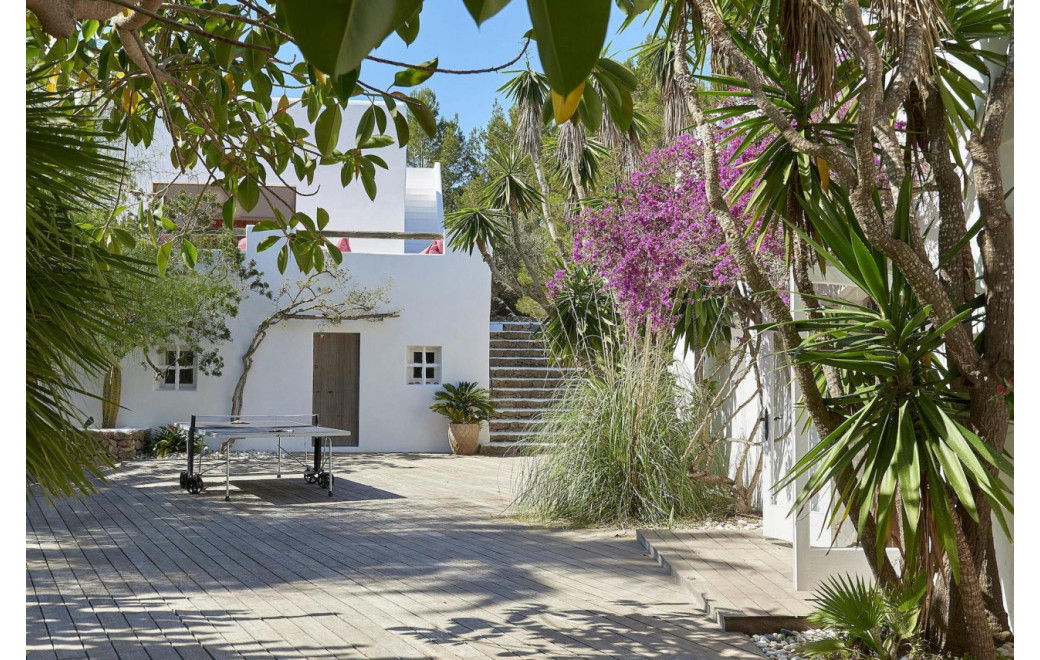
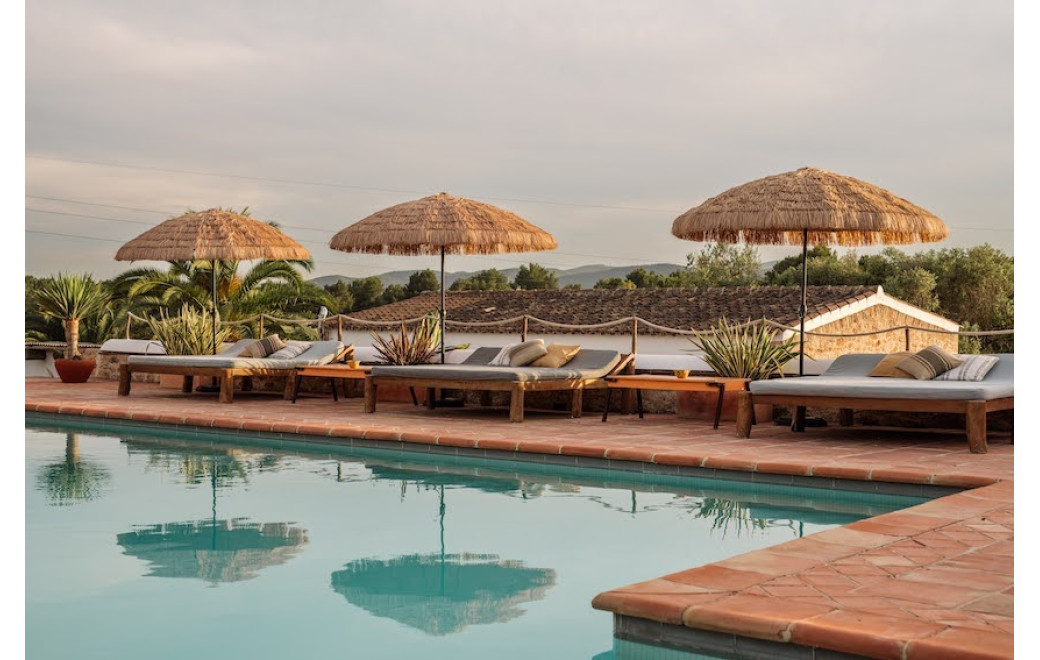
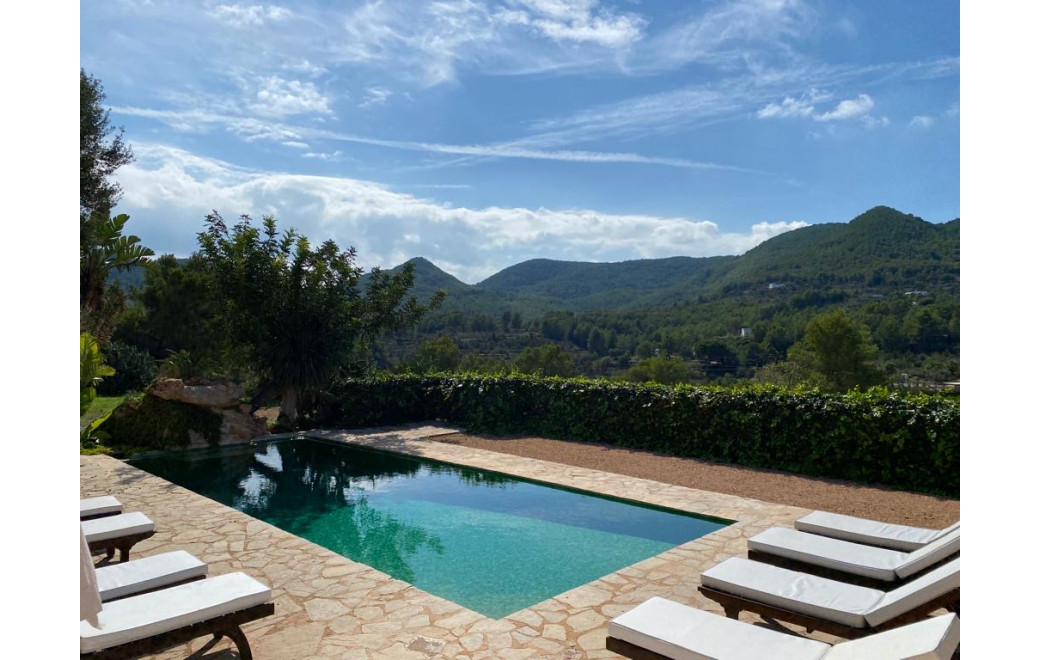
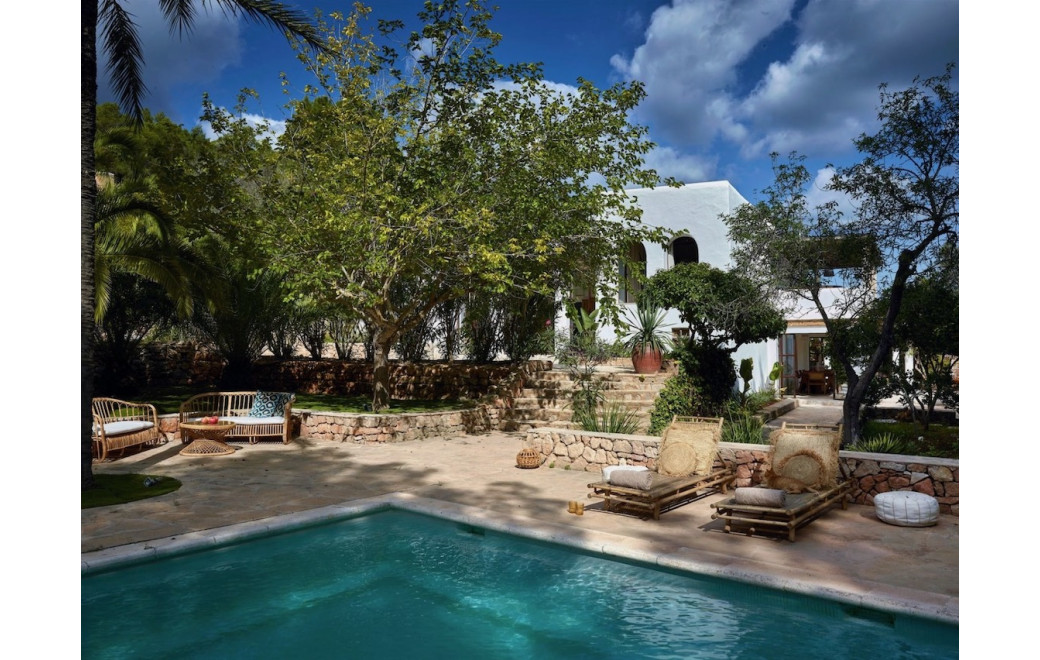
Whitewashed Ibicenco finca with sabina beams and bougainvillea, northern Ibiza
Ibiza · Vernacular architecture

Typical Fincas in Ibiza

Whitewashed walls almost a metre thick, flat roofs laid on sabina-juniper beams, interior patios shaded by bougainvillea. A hand-scouted set of authentic Ibicenco fincas — the rural farmhouse tradition UNESCO recognised in 1999, not the modern “finca-style” new-build.

9
Authentic fincas
300+ yrs
Oldest structures
24 hrs
Shortlist response
Intro · What a typical finca is

A farmhouse tradition, not a styling choice

The finca ibicenca is a specific vernacular: quadrangular cubic modules built around a central hall — the porxo — with dry-stone walls nearly a metre deep, flat or gently pitched roofs laid on beams of sabina (Phoenician juniper), lime-whitewashed exteriors, and small windows narrower outside than in. Rolph Blakstad traced the proportional system to the Phoenician “long cubit” of roughly 52.5 cm; the fabric itself has been built and rebuilt, largely unchanged, since the Neolithic.

On this page we only list fincas that actually show that architecture. Several are protected or BIC-adjacent, a couple are three-hundred-year restorations, one is a working olive and vine estate above the Santa Agnès valley. We have walked every one, shot inside them, and know which ones tolerate crews and which ones would rather host a quiet private dinner.

Request locations →
Interior patio of a traditional Ibicenco finca with sabina wood beams
Formats · three kinds of finca

Three readings of the Ibicenco finca

Restored 18th-century Ibicenco finca with dry-stone walls
4 venues

Restored 18th-century fincas

Three-hundred-year cubic structures brought back with BIC-respectful restoration — original sabina beams re-exposed, lime walls re-whitewashed, flat roofs preserved. The porxo, the small windows, the thick walls intact.

See 18th-C. fincas →
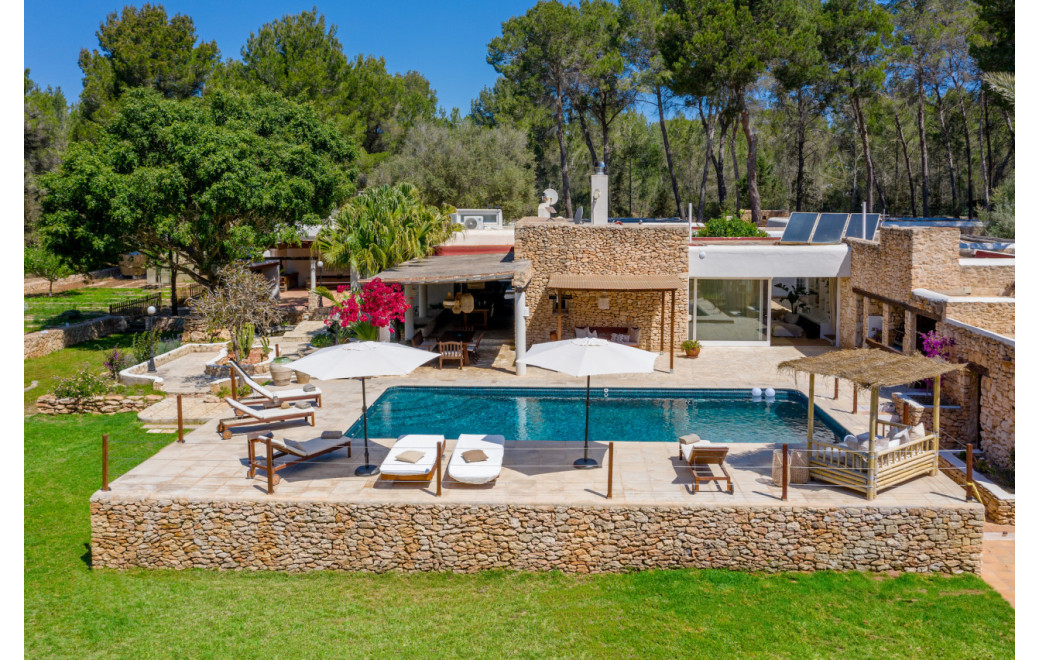
Working rural finca estate with olive terraces, Ibiza
3 venues

Working rural estates

Fincas still on productive land — olive groves, vineyards, almond and carob orchards, stone-walled terraces. Closer to the agricultural reality the architecture was invented to serve. Best for editorial and slow-tempo retreats.

See working estates →
Minimalist preserved finca shell with contemporary interior, Ibiza
2 venues

Minimalist preserved shells

Original cubic shell kept exactly; interior stripped back and re-rendered in lime, oak and linen. The Blakstad-inflected reading of the finca — architecture respected, contemporary services hidden. Quieter fashion and editorial.

See minimalist shells →
Why a typical finca

Six things an authentic Ibicenco finca gives you

Architecture older than the island’s fame

The fabric predates clubs, tourism, the airport. Construction methods trace to Phoenician-Carthaginian colonisation and, in Blakstad’s reading, to Neolithic proportional systems — unchanged for centuries because the climate didn’t change either.

Sabina beams and lime walls

Ceilings carried by beams of Phoenician juniper (sabina) — a tight-grained, aromatic local wood — above whitewashed lime-plaster walls close to a metre thick. The texture photographs like nothing else; the rooms stay cool in August heat.

The porxo and the interior patio

A central transverse hall off which cubic rooms hang, usually opening to a shaded pati heavy with bougainvillea. The single most Ibicenco spatial move: inside and outside reading as one room, south-facing, protected from tramuntana wind.

Seclusion, not resort

Most sit on hillside plots of several hectares with natural rock as foundation, backs turned to the north wind. The nearest neighbour is often a stone wall and an olive terrace away. That quiet, not a pool, is what you are actually buying.

UNESCO-context heritage

Ibiza’s “Biodiversity and Culture” inscription (1999) protects Dalt Vila and the sea-grass meadows, and sits alongside the rural vernacular these fincas belong to. The Santa Agnès, Sant Joan, Sant Mateu and Sant Carles parishes preserve the densest concentration.

Filmable, with a crew briefing

We have shot editorial and commercials in every finca on this page. Narrow stairs, fragile lime walls, ancient beams — we know what rigs pass and which don’t. Protected estates come with honest filming rules, not surprises.

Visual reference · gallery
Finca Lavanda
Finca Sata
Las Cic
Santa Agnès
Can Cullet
San Vicente
Architecture guide · long-form

What makes a finca an authentic Ibicenco finca

The architecture, materially

An authentic finca is a succession of adjoined cubic modules, load-bearing walls of dry stone and mortar close to one metre thick, whitewashed exteriors, and horizontal ceilings carried by beams of sabina — Phoenician juniper, the only local timber strong and rot-resistant enough to span. The oldest flat roofs are laid in three courses: sabina first, then ash and dried Posidonia marine grass, topped with a clay-lime skin that sheds rain and insulates. Windows are small, narrower outside than inside, and siting is always southward into the sun with the mountain behind. There is no decoration. The form is its own ornament. Related: outdoor Ibiza locations.

Authentic old finca vs modern “finca-style”

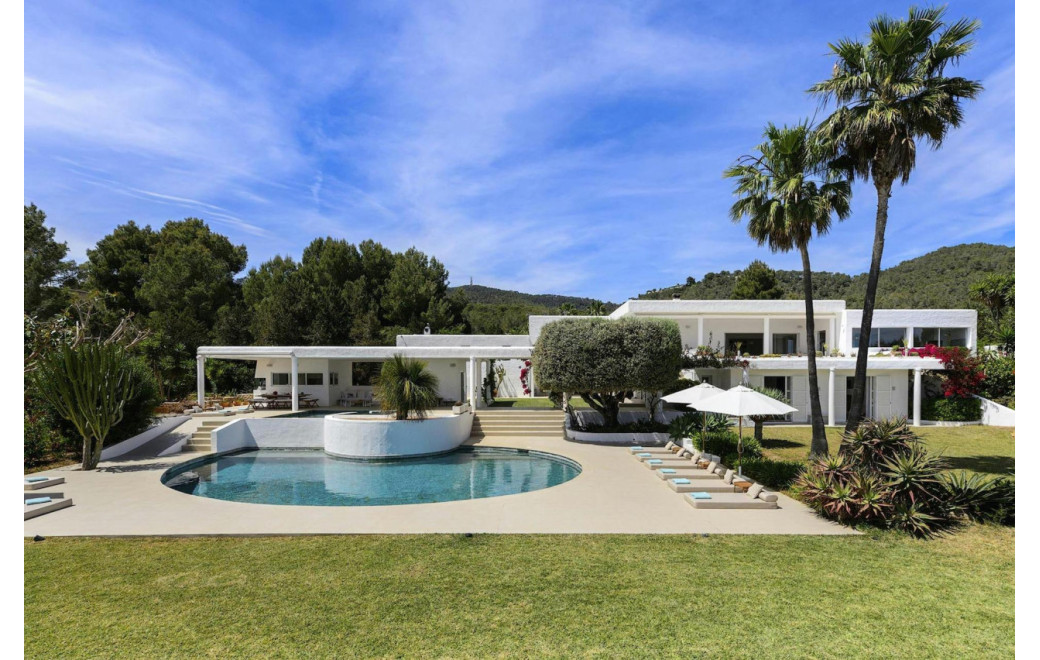
A genuinely old finca shows certain tells: walls that swell and settle slightly because they are load-bearing dry stone rather than rendered blockwork, door thresholds worn into curves, sabina beams pocked with old fixings, a porxo you walk through rather than past. Modern “finca-style” new-builds, by contrast, paint the aesthetic onto a steel-frame box — the proportions are larger, the window openings wider, the beams often decorative veneer rather than structural sabina. Both can be beautiful; only one photographs as the real vernacular. If the brief is “typical finca”, we filter ruthlessly. Related: Ibiza shoot & stay.

Geography: where the real ones survive

The densest surviving rural fabric sits in the northern parishes — Sant Joan de Labritja, Sant Miquel, Santa Agnès de Corona, Sant Mateu d’Aubarca and Sant Carles de Peralta. Here the terraces of dry-stone parets, almond orchards and carob trees remain productive, the iglesia in each village still functions as the social core, and the built density stays low thanks to protected rural land zoning. Sant Josep and Sant Jordi on the south give more Mediterranean-open fincas facing the sea. Anything close to the Ibiza Town–Santa Eulalia belt is usually restored rather than intact — still beautiful, just younger in its current form. Related: Ibiza villa locations.

Heritage, protection and the UNESCO context

UNESCO inscribed “Ibiza, Biodiversity and Culture” in 1999 — the criteria cover Dalt Vila, the Phoenician necropolis of Puig des Molins, the Sa Caleta settlement and the Posidonia sea-grass meadows. The rural finca fabric is not UNESCO-listed directly, but it is the civic context that underwrites the island’s cultural identity, and the Ibiza Preservation Fund is actively buying surrounding rural land to keep the landscape matrix intact. Many individual fincas carry BIC (Bien de Interés Cultural) or BIL protection, which constrains what you can alter, drill or rig — worth knowing before the first production plan. Related: Ibiza film permits.

Architectural tells to check on a site visit
Walls 80–100 cm thick, load-bearing dry stone
Structural sabina beams overhead, not veneer
Original porxo as transverse entry hall
Small windows, narrower externally than internally
South-facing entrance, rock-foundation hillside
Flat or gently sloped whitewashed roof
Interior pati or shaded courtyard
Surrounding dry-stone terraces and almonds

If the brief is “typical Ibicenco finca” — the architecture, not the Instagram of it — send date(s), guest count or crew size, and any references. We come back in 24 hours with three to five shortlisted fincas from this page, availability-checked, with notes on which ones are BIC-listed, which ones will take a full production, and which ones you should only visit quietly with a dinner.

Common questions

Frequently asked

What makes a finca an authentic Ibicenco finca?

Four tests: load-bearing dry-stone walls nearly a metre thick, structural sabina (juniper) beams, a transverse porxo as the entry hall, and a cubic-module footprint on a south-facing, rock-foundation hillside. If the walls are rendered blockwork, the beams are decorative, the plan is open-concept and the windows are large, you are looking at a modern “finca-style” villa — a different — sometimes lovely — thing.

How old are traditional Ibiza fincas?

The construction methods date back to Phoenician-Carthaginian colonisation, and in Rolph Blakstad’s reading the proportional system — based on a 52.5 cm “long cubit” — traces to the Neolithic. Individual surviving structures typically range from 150 to 400 years old; the architecture barely changed for centuries because Ibiza was a culturally isolated island using only local materials: dry stone, sabina, clay, lime, marine Posidonia.

Can you film or host an event in a BIC-protected finca?

Yes, with conditions. BIC (Bien de Interés Cultural) protection restricts structural alteration and specifies what you can drill, rig or light against historic fabric, but does not block use. In practice we brief crews on what the walls and sabina beams will accept, coordinate with the Consell d’Eivissa and the Ibiza Film Commission where needed, and design the shoot or event around the building rather than the other way round.

Where on the island are the most authentic fincas?

The northern parishes — Sant Joan de Labritja, Sant Miquel, Santa Agnès de Corona, Sant Mateu d’Aubarca and Sant Carles de Peralta — hold the densest surviving rural fabric, terraces and orchards intact. Sant Josep on the south delivers Mediterranean-open fincas facing the sea. Anything inside the Ibiza Town–Santa Eulalia belt tends to be restored rather than fully original.

What is sabina wood and why does it matter?

Sabina is Phoenician juniper (Juniperus phoenicea), a tight-grained, aromatic, highly rot- and insect-resistant local tree that was — for centuries — the only timber on Ibiza strong enough to span a roof. Every authentic finca is carried on sabina beams; the grain, the dark tone and the carved shaping are an immediate visual signature and the main thing modern imitations cannot fake at close range.

Can I rent an entire finca privately?

Yes. Several fincas on this page are designed for whole-property takeover — 30 to 80 guests for intimate dinners or retreats, a handful tolerating larger activations where the architecture and the dry-stone terraces can hold the footprint. Tell us the date and guest count; we will filter to estates where exclusivity is genuinely available and the owner welcomes the format.

How do I request a finca shortlist?

Send dates, guest or crew count, format (private dinner, editorial shoot, retreat, small production) and any references. We come back within 24 hours with three to five shortlisted Ibicenco fincas, availability-checked, with honest notes on architecture, capacity, BIC constraints and pros/cons for your brief. No obligation.

Ready when you are

Visit a real Ibicenco finca

Date, guest or crew count, a reference or two — we come back in 24 hours with a shortlist of authentic typical fincas. No obligation, no signup, no drip campaign.

Request locations